
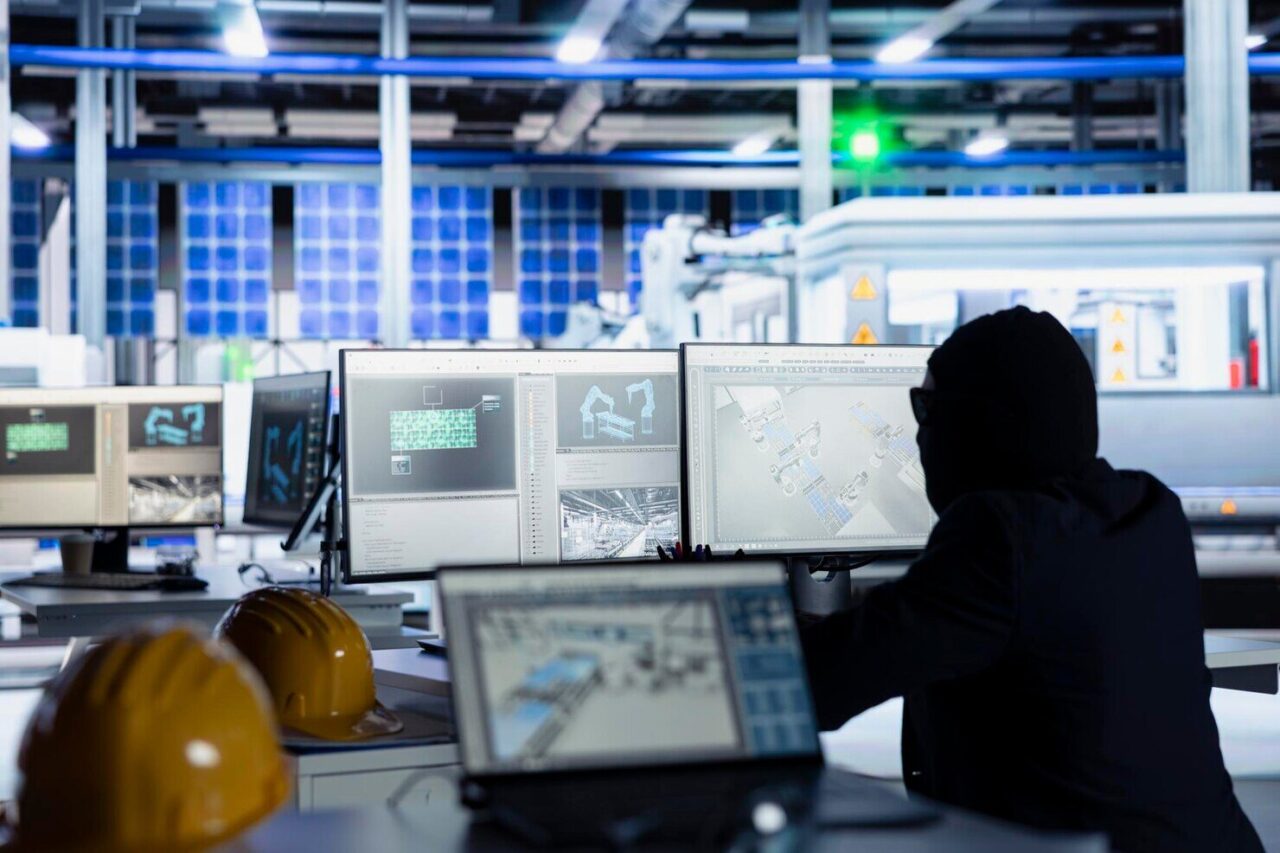
If you speak with plant managers in Pune, Ahmedabad, Chennai, or Jamshedpur today, you’ll notice a shift in their worries. It’s no longer just labour shortages, supply chain delays, or machinery downtime.
It’s cyber attacks.
Manufacturing was once an unlikely target, but with factories moving toward automation, IoT sensors, robotic systems, and cloud-connected production lines, attackers suddenly have a new favourite industry.
The Economic Times reported last year that India’s manufacturing sector saw a significant rise in ransomware attacks, especially on companies with outdated operational technology (OT).
Factories have become digital—and attackers have noticed.
Why the Manufacturing Sector Is Being Targeted
Unlike banks or IT firms, factories don’t always think like tech companies.
Their equipment is designed to last decades, not update weekly.
1. Old OT Meets New IT
Operational technology—PLC units, SCADA systems, CNC machines—often runs ancient software.
Once you connect these machines to modern networks, you create an entryway attackers can exploit.
2. Production Downtime Is Extremely Expensive
If a factory producing auto parts goes offline for even 12 hours, the losses can be enormous.
Attackers know this pressure and use it to push companies toward paying ransoms.
3. Supply Chain Interconnectivity
A single compromise in one supplier can ripple across multiple factories.
A similar situation happened when ransomware hit Hon Hai (Foxconn) in 2020—covered by Forbes.
Indian manufacturers now face the same risk as they adopt digital workflows.
Common Vulnerabilities in Industrial Environments
Here’s what cybersecurity specialists repeatedly see inside factories:
- Machines running Windows XP or Windows 7
- No network segmentation between OT and office IT
- Unsecured Wi-Fi inside plant floors
- USB ports still actively used for file transfers
- Outdated access controls
- Lack of real-time monitoring
All of these are small cracks that attackers can turn into a shutdown.
OT Security vs IT Security — They’re Not the Same
This is a point manufacturing leaders often misunderstand.
IT security protects laptops, cloud apps, emails, and business data.
OT security protects machinery, sensors, controllers, and the physical production environment.
The goals are different:
| IT Security | OT Security |
| Keep data safe | Keep machines running |
| Patch frequently | Don’t patch if it risks downtime |
| Rapid system updates | Stability is more important than features |
| Standardised environments | Custom hardware with long lifecycles |
This difference means that cybersecurity in the manufacturing industry requires expertise that typical IT teams may not have.
A Recent Indian Case: Ransomware in an Automotive Plant
In 2023, a well-known automotive components manufacturer in India suffered a ransomware attack that halted production for over 48 hours.
The attackers didn’t steal data.
They simply locked production systems—enough to cause major delays in supply.
This is the nightmare scenario for plant managers.
FAQs
- Why is the manufacturing sector targeted by cyber attackers?
Because outdated OT systems, high downtime costs, and increasing digital connectivity make it easier and more profitable for attackers.
- What are common vulnerabilities in industrial environments?
Legacy machines, lack of segmentation, outdated operating systems, weak access controls, and limited monitoring.
- How does OT and IT security differ?
IT protects data; OT protects machines. IT can patch frequently; OT prioritises uptime. The two worlds require different security approaches.
